BMW i7 PAVILLION
Click any image to enlarge
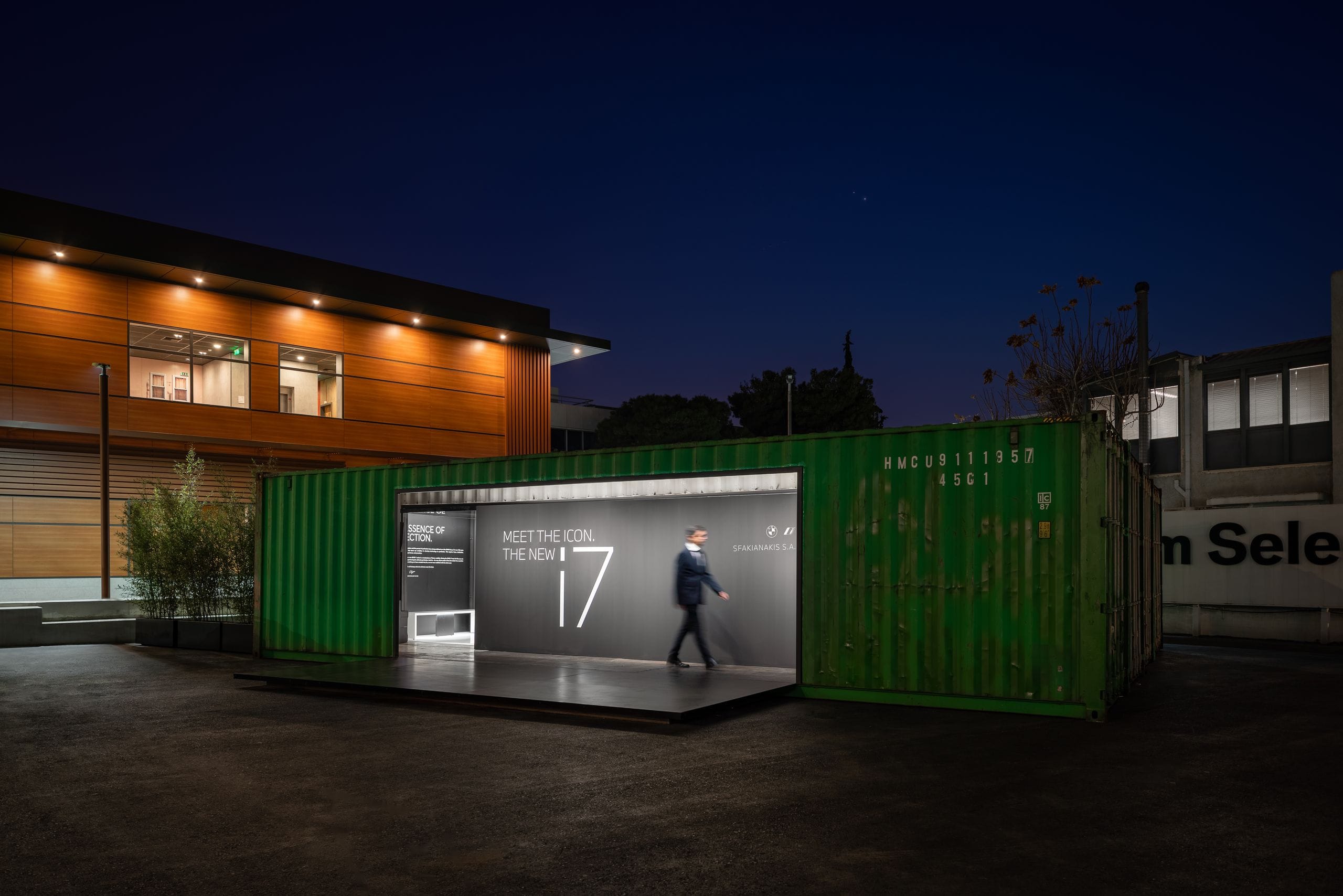
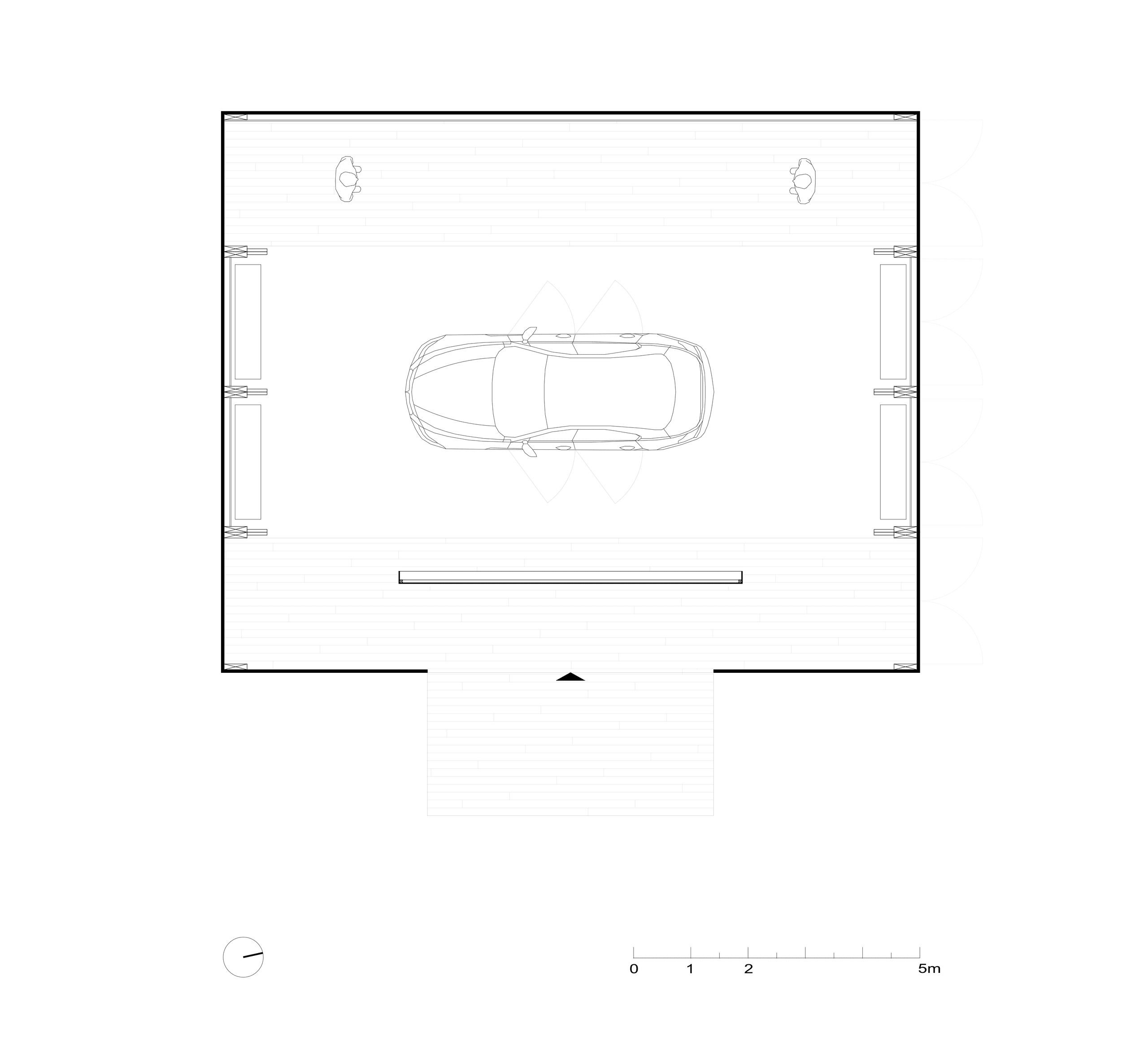
The space is formed by joining a series of freight containers, an enclosure inherently associated with the transport and temporary storage of the very objects now displayed within it. Here, however, that role is reversed. What would normally carry and protect the exhibit becomes the exhibition space itself.
The metal structure and its temporary character remain visible. Inside, colour, light and reflection begin to alter this familiar first impression. The contrast between the industrial shell and the atmosphere of a museum gallery introduces the first of the space’s ambiguities.
A central reference for the design was Lewis Carroll’s Alice’s Adventures in Wonderland, particularly the way the story continually alters the relationship between the body, space, scale and the desire to take the next step.
Changes in scale, an unstable sense of orientation, light, reflection and the gradual revelation of the interior create a setting in which the familiar becomes strange. Each step generates the need to move a little further, until curiosity gradually turns into desire.
On another level, the pairing of sculpture and car recalls the historic Futurist provocation surrounding art, the machine and speed. The car returns to the exhibition space not in opposition to art, but beside it.
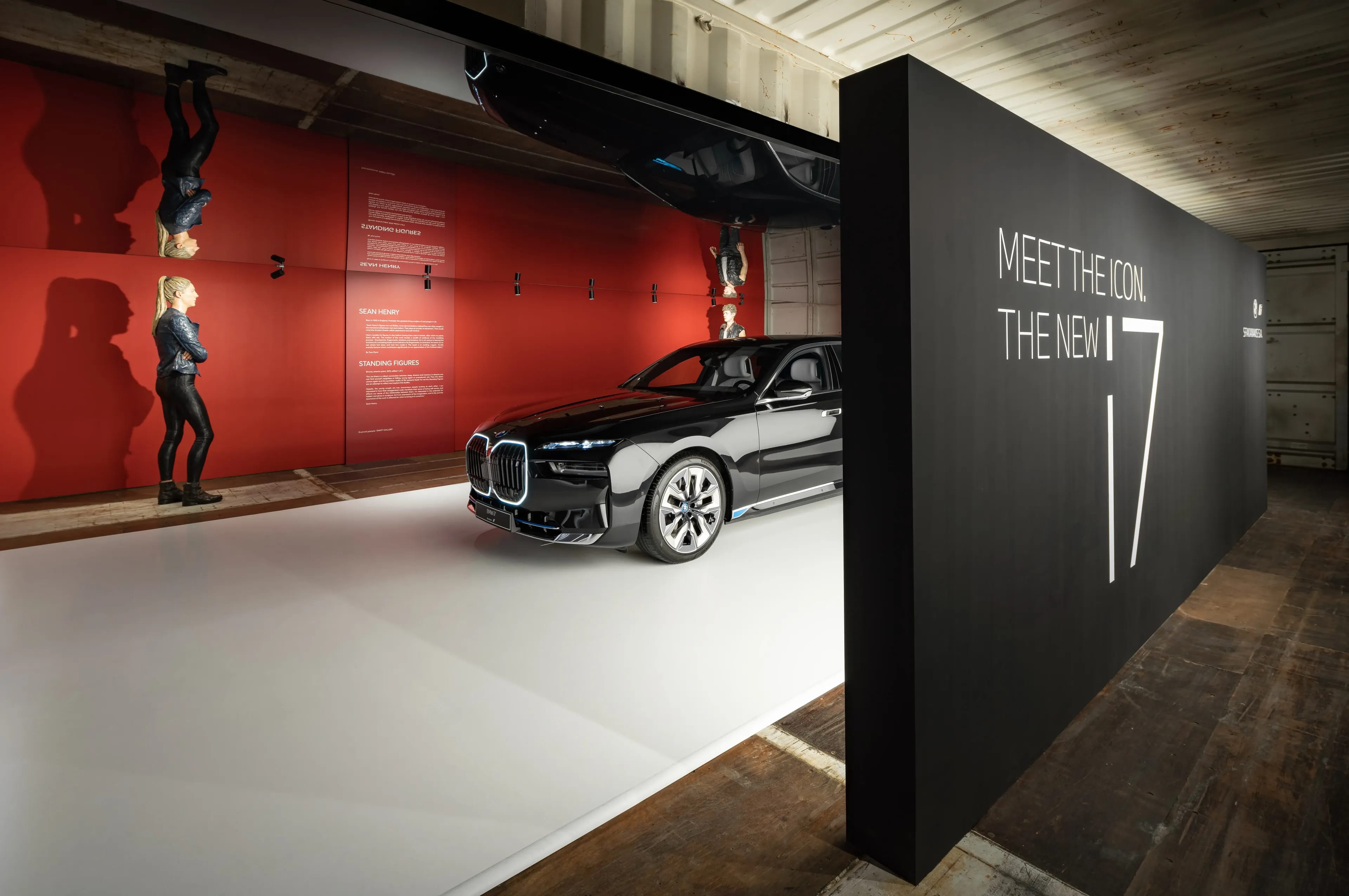
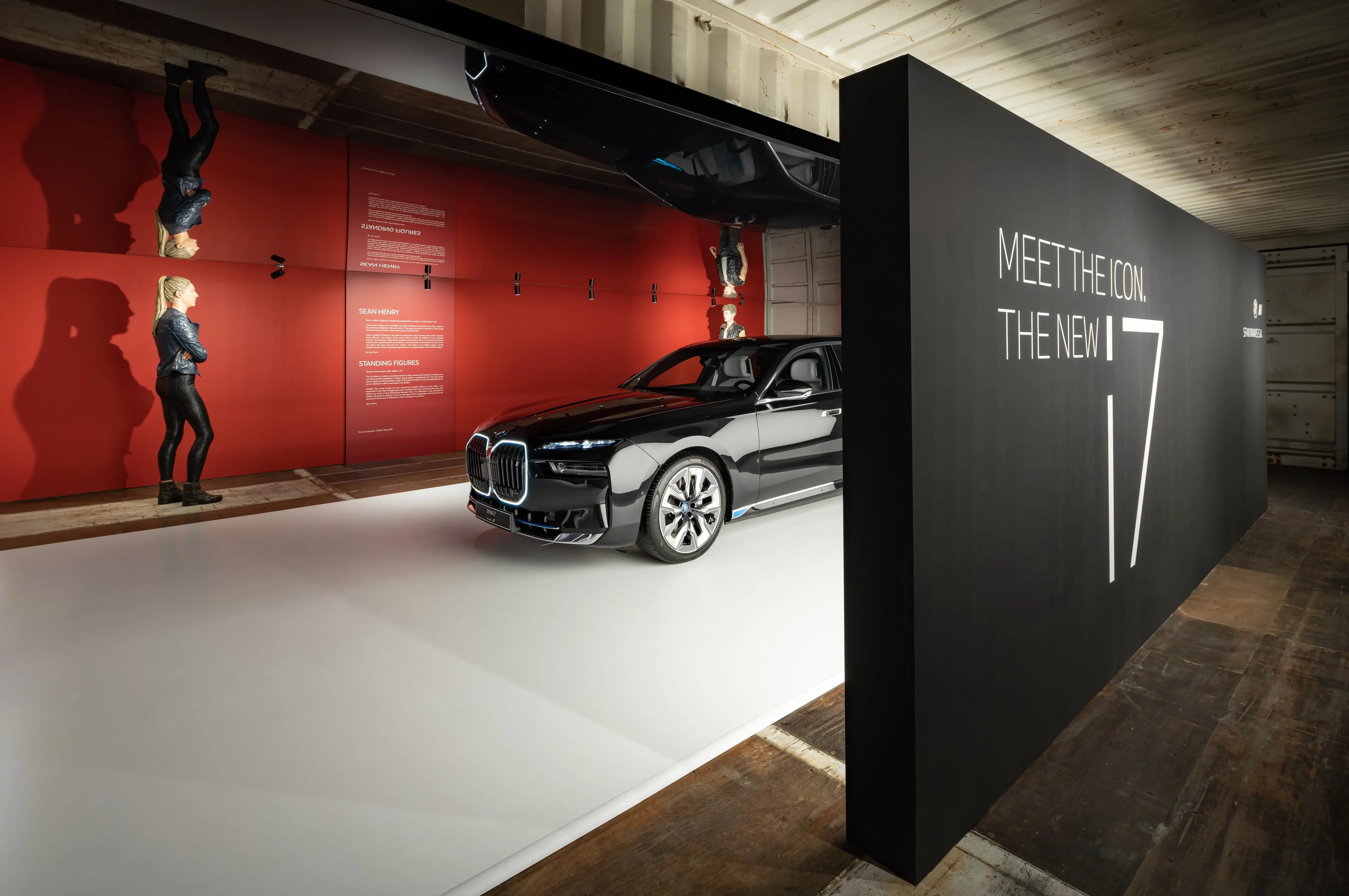
The first reversal occurs at the entrance. What initially appears to be a dark boundary reveals a passage at its side. Once the visitor enters, that same surface becomes a large plane of light.
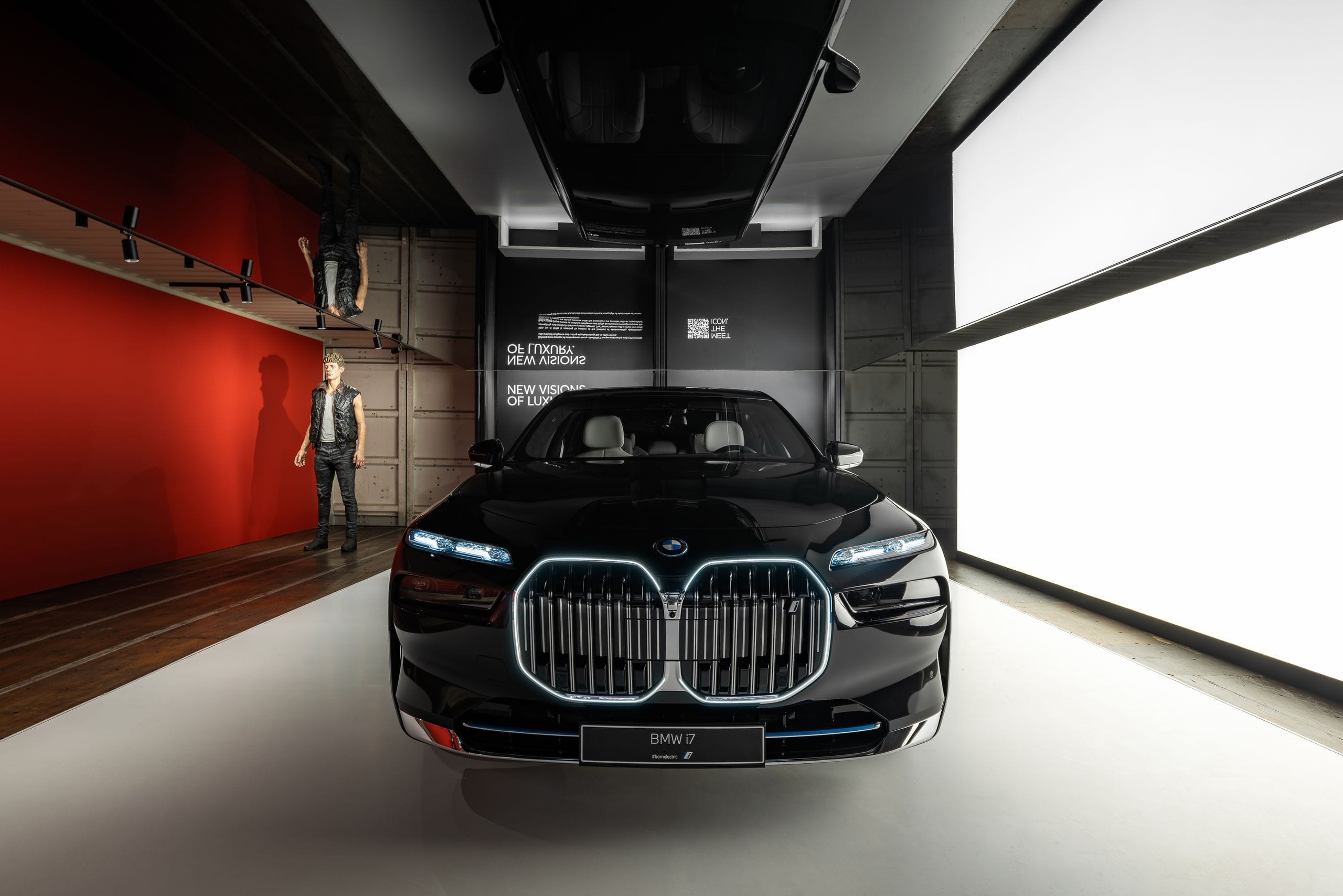
The BMW i7 stands at the centre. Above it, a dark reflective plane descends from the ceiling and mirrors the car overhead. Sky and ground are drawn visually closer, while the car appears poised, as though ready to move. Its image is not exhausted through observation. It remains the central object of desire within the space.
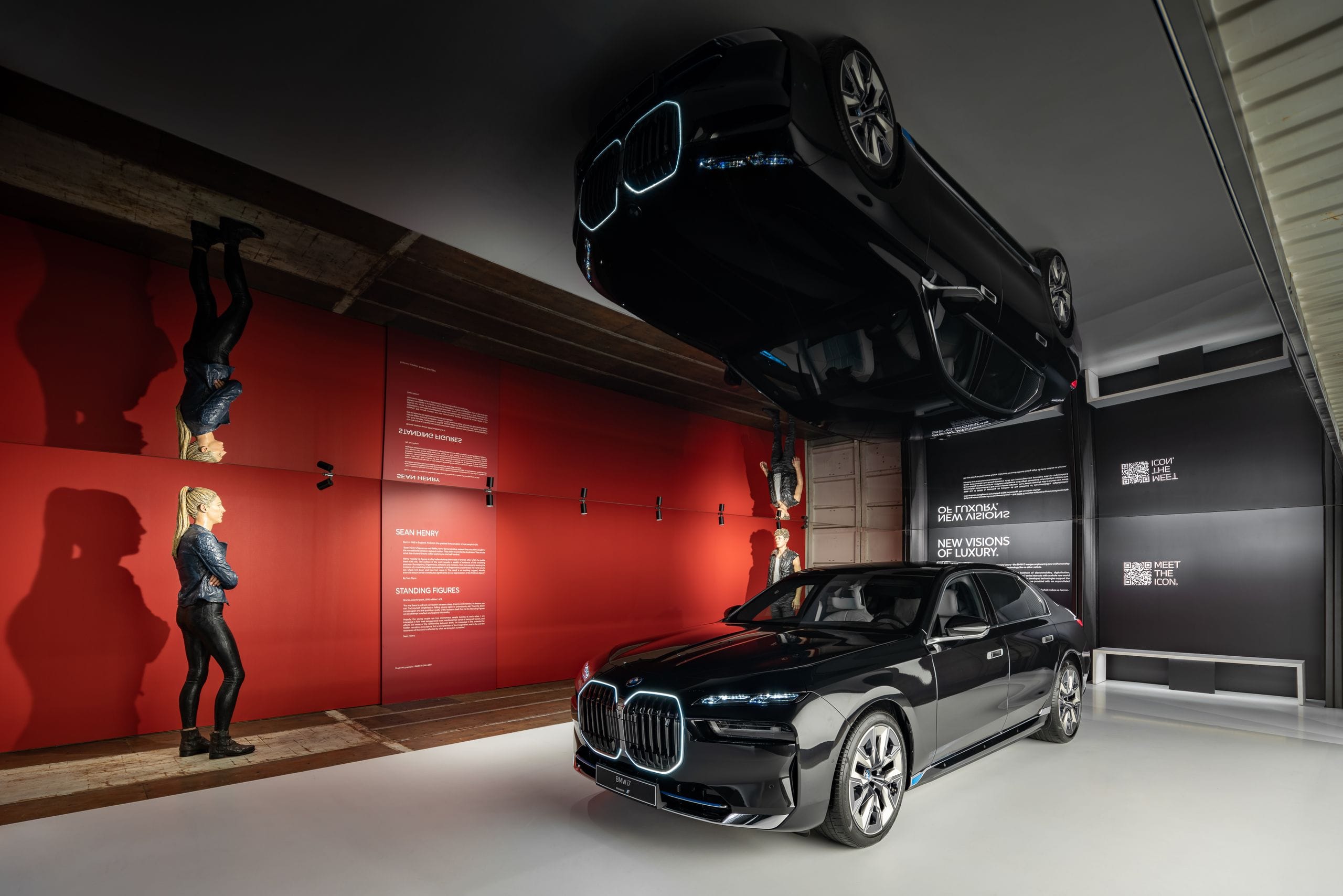
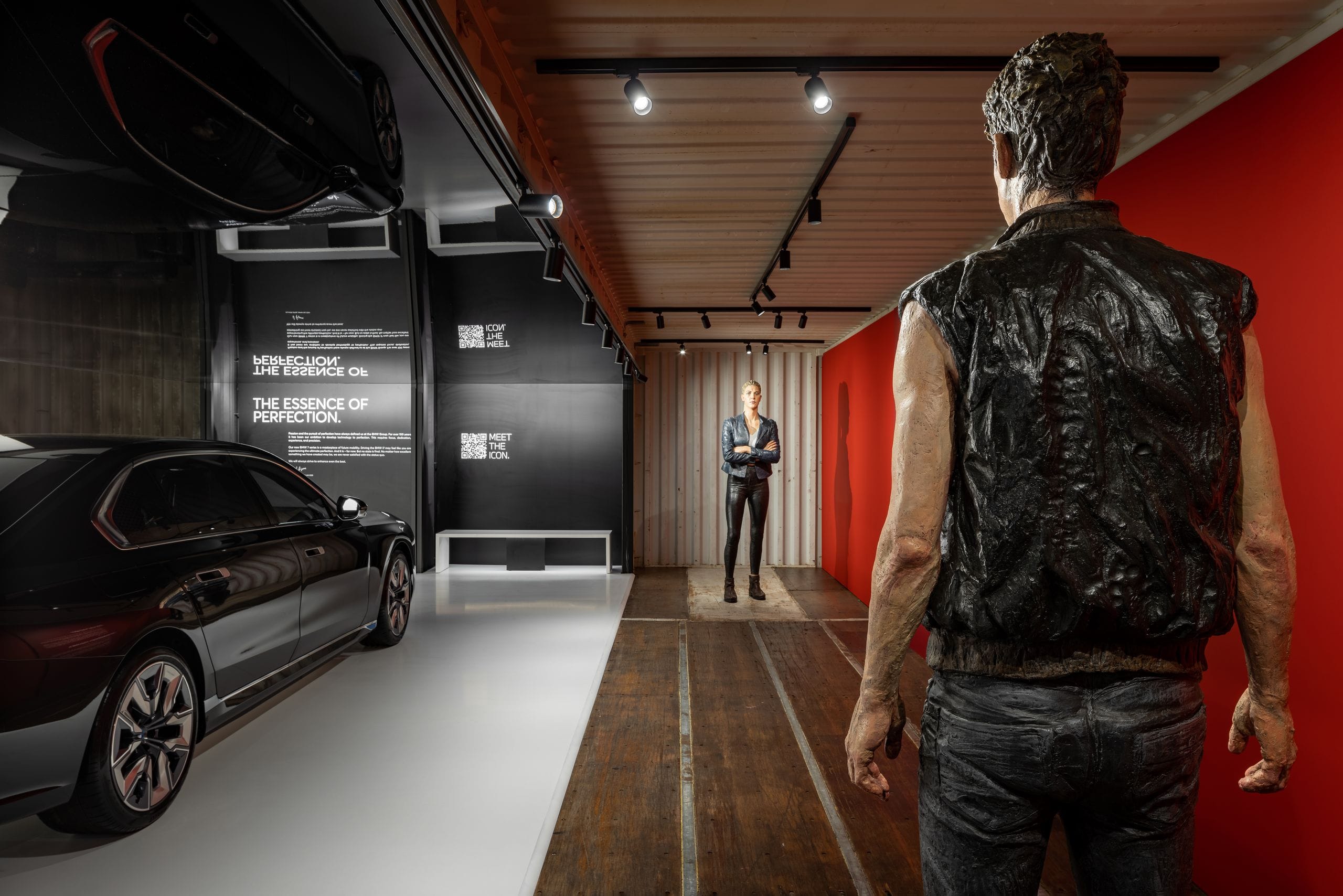
At the far end, Sean Henry’s human figures introduce a second, more fundamental reversal. They are recognisable and ordinary, yet their scale and posture exceed the visitor’s own bodily measure, giving them an enigmatic, almost silent presence.
They stand motionless before the promise of movement embodied by the car. It is unclear whether they are observing it, ignoring it or witnessing an event that has already taken place. Their stillness makes the idea of movement more intense.
The elongated red wall, black surfaces and stark white light complete the reference to the intensity and ritual of a fine-art museum gallery. The image remains ambiguous, as the industrial shell is still visible behind this almost museological setting. Reflections multiply the car, the figures and the space itself, further unsettling the visitor’s perception.
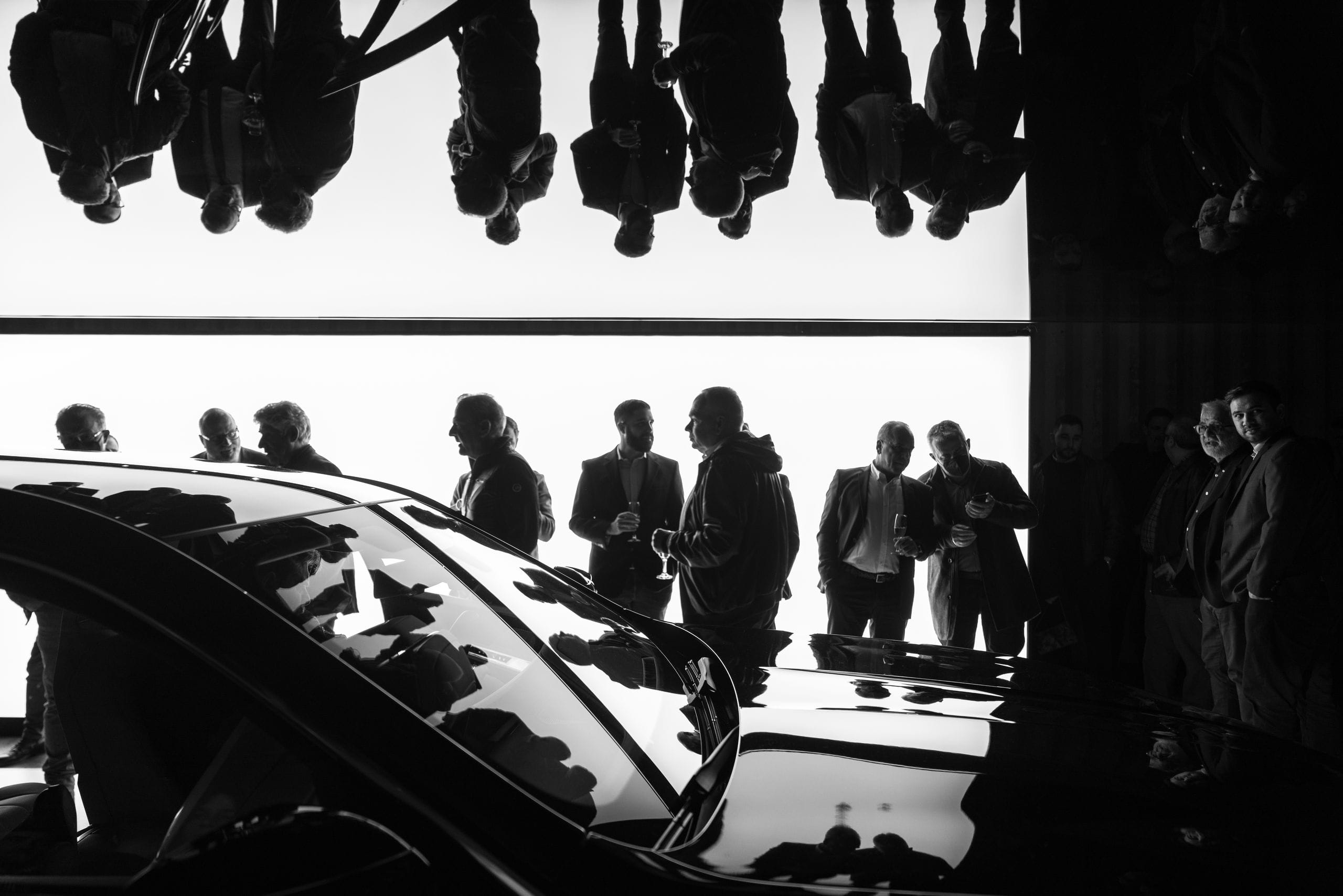
The project seeks to turn a temporary presentation into an experience that remains with the visitor. Through changes in scale and light, the use of reflection and the relationship with the human body, the space moves beyond the conventions of a product display and becomes a mechanism for perception and desire.
*Τhe event was organised by the SFAKIANAKIS Group and held at the BMW & MINI SFAKIANAKIS S.A. premises in Marousi. The sculptures were provided courtesy of RARITY GALLERY.
Nefeli Capon, Matteo Pergamian, Stathis Papanagiotou
Vasiliki Malakasi / Idea design LTD
Katerina Kamprani
Gavriil Papadiotis / GavriiLux Photography